The Architect of Consciousness: Decoding the Legacy of Pharaoh Akhenaten
The Architect of Consciousness: Decoding the Legacy of Pharaoh Akhenaten
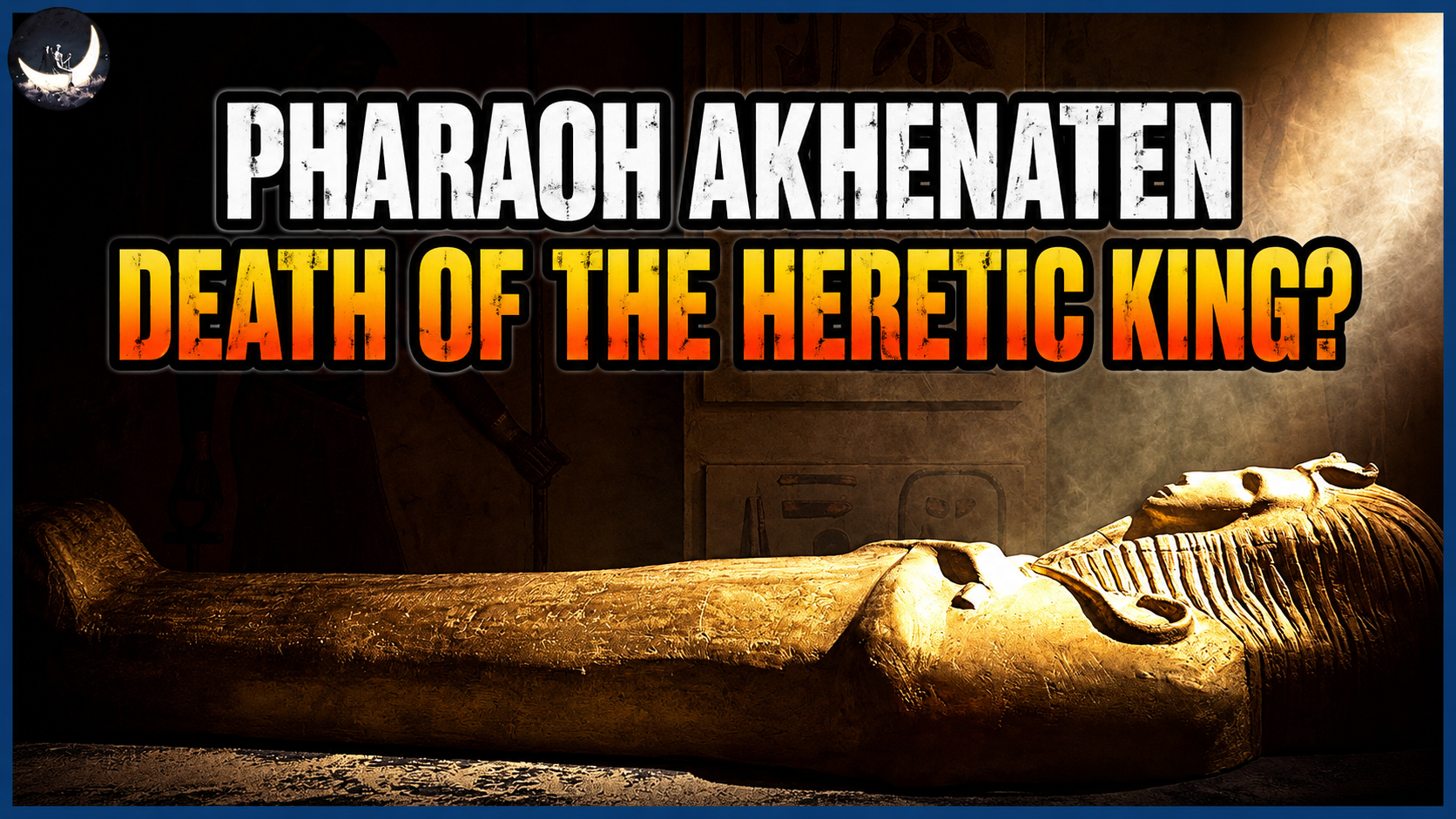
In the annals of the 18th Dynasty of Egypt, the reign of Pharaoh Akhenaten (c. 1353–1336 BCE) remains one of history’s most profound enigmas. Traditionally categorized as a “heretic” for his radical pivot to monotheism, alternative perspectives suggest his actions were not merely political defiance, but a strategic implementation of an ancient, advanced knowledge system. This article explores the hypothesis of “intentional immortality” and the pedagogical mission of Akhenaten—a transitionary figure who sought to re-code human consciousness.
The Heretic’s Dilemma: Monotheism as Metaphysical Instruction
Akhenaten’s reign was characterized by the suppression of the traditional polytheistic pantheon and the elevation of the solar disk, the Aten, as the sole source of divine connection. Historians often emphasize the resulting social and military friction: the alienation of the powerful priesthood and the demobilization of Egypt’s formidable military apparatus.
However, from a metaphysical framework, this was not mere religious zealotry. Proponents of this view argue that Akhenaten aimed to decentralize spirituality. By asserting that “the Divine resides within,” he challenged the authority of the priestly class, who served as intermediaries between the populace and the pantheon. By forcing this shift, Akhenaten was attempting to bypass the ego-driven structures of society to restore the “original” connection between human DNA and the Universal consciousness.
The Phenomenon of “Immortality”: A Redefinition
The narrative surrounding Akhenaten shifts dramatically when applying a non-biological definition of “immortality.” In this context, immortality is not defined as the indefinite preservation of the physical soma, but as the continuity of conscious memory.
Proponents suggest that Akhenaten and his initiated circle achieved a state of total conscious awareness, where memory remains uninterrupted across physical incarnations. Under this paradigm, the physical body is viewed as a transient “suit”—a vessel to be discarded when its function is fulfilled, rather than a prison for the eternal self.
The “Transition” and the Mystery of the 300
The disappearance of Akhenaten is traditionally attributed to political assassination. Alternative accounts, however, suggest a sophisticated exit strategy. Rather than succumbing to poison, it is proposed that the Pharaoh employed an ancient technique—akin to biochemical suppression used in other cultures—to induce a state of suspended animation, allowing him to bypass the limitations of his environment and continue his work within the “Halls of Amenti.”
His primary success lay in his “Mystery School”—the Law of One. Within a 17-year window, Akhenaten successfully guided approximately 300 individuals to achieve this state of immortal consciousness. This group, effectively a vanguard of human evolution, later integrated into the Tat Brotherhood and eventually established the Essene Brotherhood at Masada. This lineage, the narrative posits, provided the foundational structure for later spiritual developments, including the lineage of Jesus of Nazareth.
The Geometry of Consciousness: The Left and Right Eyes of Horus
The technological core of Akhenaten’s teaching was the integration of the “Two Eyes of Horus”:
-
The Left Eye (Feminine/Right Brain): The traditional knowledge taught through the 12 primary temples along the Nile, focusing on intuition and internal reception.
-
The Right Eye (Masculine/Left Brain): The specialized, oral-only curriculum initiated by Akhenaten, representing logical synthesis and the path to Christ-consciousness.
The presence of the “Flower of Life” and the 47 chromosomes of Christ-consciousness inscribed in the subterranean levels of the Great Pyramid suggests that Egypt was, at its core, a pedagogical machine designed to facilitate the “ascension” or resurrection of human consciousness to a higher frequency.
Conclusion: A Legacy Re-evaluated
The demonization of Akhenaten by subsequent dynasties, such as that of Seti I, served to erase his efforts to re-map the human psyche. Yet, if we view his reign through the lens of evolutionary consciousness, Akhenaten was not a failed king, but a profound architect. He did not seek to rule a territory; he sought to update the software of the human experience. As we continue to uncover the remnants of these “Mystery Schools,” the question remains: are we, as a species, finally approaching the frequency required to decode the work that the Pharaoh left behind?
Reflection: This narrative presents a fascinating alternative history that blends ancient mystery traditions with modern metaphysical theory. Do you believe there is a link between these ancient “Mystery Schools” and the rapid evolution of human consciousness as observed in modern psychological paradigms?